Last updated on April 1st, 2026 at 03:15 pm
Ever stare at a message and think… “What does ATP mean in text?”
You’re not alone. ATP pops up everywhere in Gen Z conversations. Quick texts. TikTok comments.
Snapchat streaks. Group chats bubbling with drama. When someone drops ATP, they’re sending a message beyond just three letters — they’re revealing their emotional state.
This guide breaks down everything:
- What “ATP” stands for in texting
- How it sounds in different emotional contexts
- When to use it (and when not to)
- Best alternatives for every situation
Let’s jump in because ATP… you want answers. 😉
✅ What Is ATP?
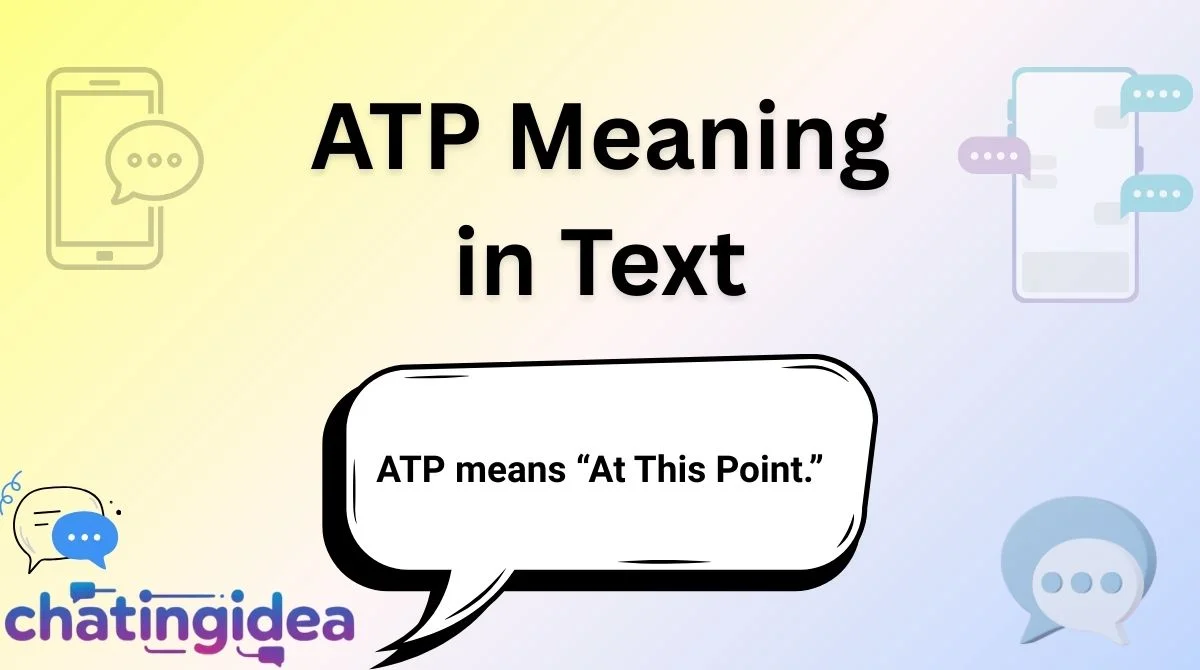
ATP means “At This Point.”
It’s shorthand used in texting and social media to show someone:
- Reached a limit
- Stopped caring
- Doesn’t want to explain further
- Feels done with the situation
It’s popular among Gen Z and teens, but many Millennials use it too because — honestly — life gets exhausting.
Example:
“ATP I’m just over it.”
ATP gets straight to the point. It cuts emotional clutter and tells someone exactly where your mind is… right now.
Texting culture is full of short expressions like ATP, which help people communicate emotions quickly. Another common abbreviation you may see in chats is TTM, often used in online messages and social media.
💬 What Does ATP Mean in Texting & Online Conversations?
ATP communicates a shift in attitude. Something changed. You once cared more than you do now.
You’ll usually see it used in:
- Drama-filled chats
- Relationship conflicts
- Friends venting
- Group chat chaos
- Social media comments
Common Conversation Scenarios
| Situation | ATP Example | What It Really Means |
|---|---|---|
| Someone keeps complaining | “ATP you just want attention” | I’m tired of hearing this |
| After being ignored | “ATP I’ll stop reaching out” | I won’t chase you |
| During a long argument | “ATP you believe what you want” | I give up |
| When observing chaos | “ATP this is entertaining” | I’m just watching now |
ATP can express emotional withdrawal — whether angry, tired, or chill.
👔 Is ATP Formal or Informal?
ATP is strictly informal slang.
It fits:
- Texting
- Snapchat
- Instagram comments
- Tweets
- Group chats
It does not belong in:
- Work emails
- School essays
- Professional convos
- Serious discussions that need clarity
Using ATP in formal settings risks confusion and can seem unprofessional.
Internet slang like ATP is common in casual chats and social media conversations. Similarly, other abbreviations such as GNG also appear frequently in texting and online communities.
🕰 When Should You Use ATP? (Context Matters)
ATP adds flavor to digital communication. It’s a tone marker.
✅ Good Times to Use ATP
- You’re expressing frustration
- You’re tired of explaining
- You’re setting emotional boundaries
- You’re joking about a chaotic situation
- The chat is informal and friendly
Examples:
- “ATP it is what it is”
- “ATP I’m just done trying”
Short but powerful.
❌ When NOT to Use ATP
Avoid ATP when:
- The topic is sensitive (health, trauma)
- Someone might take it personally
- You’re speaking to parents, teachers, bosses
- You want to stay polite and calm
- You’re clarifying important information
Example of tone gone wrong:
“ATP idk what you want from me”
→ This might escalate conflict fast.
Texting is already tone-challenged — ATP can sharpen emotions.
🎭 Different Emotional Tones Behind “ATP”
Same letters. Different energy. Context shapes the vibe.
Below are the four main tone groups:
😩 Exhaustion
When your energy level hits zero.
Examples:
- “ATP I need sleep”
- “ATP I have nothing left to say”
- “ATP I’m mentally drained”
Tone: tired, defeated, honest
🤨 Frustration
When someone pushed your limit.
Examples:
- “ATP believe what you want”
- “ATP this is ridiculous”
- “ATP you don’t listen anyway”
Tone: irritated, upset, boundary-setting
😐 Indifference
When you detach emotionally.
Examples:
- “ATP I couldn’t care less”
- “ATP it doesn’t matter anymore”
- “ATP I’m just chilling”
Tone: neutral, detached, cold
🤷 Casual Humor
When chaos gets funny.
Examples:
- “ATP the drama is entertaining”
- “ATP I’m here for the memes”
- “ATP I can’t take this seriously anymore”
Tone: playful, sarcastic, chill
⚠️ Why People Sometimes Avoid Using ATP
Although ATP is easy and trendy, it has drawbacks:
- Tone can feel harsh
- People over 30 might not understand it
- Can escalate arguments unintentionally
- Readers might misinterpret emotional intent
Clarity is communication’s best friend. ATP isn’t always the clearest choice.
🔄 Best Alternatives to “ATP” (Depending on Emotion)
Different contexts need different levels of emotional honesty.
Here’s a categorized list of strong alternatives:
A — Exhausted / Drained
- “I’m too tired to care right now.”
- “I need a break from this.”
- “I’m drained.”
- “Let’s pause this.”
Tone: softer, honest.
B — Frustrated / Annoyed
- “I’m done arguing.”
- “This isn’t worth it anymore.”
- “I’m so over this.”
- “Just forget it.”
Tone: draws a clear line.
C — Neutral / Detached
- “I’m stepping back.”
- “It doesn’t matter to me anymore.”
- “I’ll let it play out.”
- “I’m indifferent.”
Tone: calm, mature.
D — Humorous / Casual Chaos
- “I’m just here for the show.”
- “I give up lol.”
- “This is entertaining now.”
- “I’m watching the meltdown.”
Tone: jokey, internet-style.
E — Polite Alternatives
Use these for mixed-age audiences or sensitive convos:
- “I’d rather move on from this.”
- “Let’s leave it there.”
- “We can talk later.”
- “I’ll step out of this conversation.”
Tone: respectful.
🎚 Tone Comparison: ATP vs Alternatives
| Expression | Tone Level | Best Use Case |
|---|---|---|
| ATP | Medium–Harsh | Venting frustration or detachment |
| “I’m stepping back” | Neutral–Soft | Keeping peace |
| “I’m so over this” | Harsh–Direct | Ending drama |
| “I give up lol” | Light–Funny | Defusing tension |
| “Let’s leave it there” | Mature–Calm | Preventing conflict |
Choose based on how you want to
1️⃣ Protect relationships
2️⃣ Show boundaries
3️⃣ Control the vibe
Communication is emotional strategy.
📱 Where ATP Fits Best (Platform Breakdown)
Different apps interpret tone differently.
| Platform | Should You Use ATP? | Why |
|---|---|---|
| TikTok | ✅ Yes | Meme-friendly and sarcastic |
| Snapchat | ✅ Yes | Casual daily convos |
| Instagram (DMs) | ✅ Yes | Friends get the slang |
| X / Twitter | ✅ Yes | Short comments & clapbacks |
| Discord | ✅ Sometimes | Depends on server culture |
| Workplace Chats | ❌ No | Too informal |
| ❌ Definitely no | Tone misreads likely |
ATP belongs in vibe-based communication.
🧩 Mini Grammar Guide for ATP
- Usually placed at the beginning of a sentence
- “ATP I don’t care anymore.”
- Or mid-sentence with commas omitted
- “I’m tired ATP I can’t keep doing this.”
- Uppercase ATP is standard
- Lowercase atp appears casual but is understood
ATP behaves like a sentence starter expressing mood.
✍️ Realistic Message Examples (For Every Scenario)
These are modern. Not cringe.
Friend drama
- “ATP you don’t want my help so I’ll stop.”
Relationship conflict
- “ATP I just feel ignored.”
Group chat chaos
- “ATP this is free entertainment.”
Homework or deadlines
- “ATP I’ll submit whatever I have.”
Sports team losing
- “ATP idc if we lose by 50.”
Short, punchy, emotional.
🧠 Common Misunderstandings About ATP
ATP has some classic misreads:
- Some think it means “Answer The Phone”
→ Not this article’s focus - Older adults assume it’s rude
→ They miss the nuance - It can look aggressive when you’re actually tired
→ Tone varies wildly by context
The reader’s interpretation matters as much as your intent.
❓ Frequently Asked Questions (FAQs)
What does ATP mean in text?
ATP stands for “At This Point”. It shows a person is tired, frustrated, or detached from the conversation.
Is ATP rude?
It can sound blunt if emotions are high. In casual humor or neutral settings, it isn’t rude.
Should adults use ATP?
Anyone can use ATP but slang is most common in Gen Z circles.
Is ATP better than saying “I don’t care”?
Yes. ATP sounds less harsh while still setting boundaries.
Can ATP be used in professional messages?
No. It’s slang and can harm communication clarity in formal settings.
✅ Final Thoughts
ATP is a powerful shortcut in modern texting. Three letters deliver:
- Emotion
- Frustration
- Humor
- Boundaries
When you say “ATP I’m done”, everyone knows exactly how you feel.
But like any slang, the right time and tone are everything. Use ATP wisely to communicate your emotional shift without accidentally sparking more drama.
Because ATP… clarity matters. 😉

Aurora Blake – English language researcher and vocabulary specialist passionate about explaining word meanings and full forms in a simple, clear way.