
The slang word “fein” has been popping up everywhere—from text messages and memes to TikTok captions and Instagram comments.
Many people search for fein meaning slang because the word feels familiar but confusing at the same time. Is it an insult?
A joke? A compliment? The answer depends on how and where it’s used.
In modern slang, fein usually describes someone who is desperate, obsessed, or craving something badly.
It’s informal, expressive, and often playful—though sometimes it can be teasing or critical.
As online language evolves fast, slang like fein spreads quickly and takes on new shades of meaning.
This guide breaks down exactly what fein means, where it came from, how people use it today, and how you should respond when someone calls you one.
What Does Fein Mean in Text & Chat?
In text messages and online chats, fein is slang for a person who really wants something—sometimes a little too much.
Most commonly, it means:
- Someone who is desperate
- Someone who is obsessed
- Someone who is acting needy or thirsty
It’s often used jokingly between friends, but context matters. Depending on tone, fein can be playful, sarcastic, or lightly insulting.
Quick examples:
- “Bro you’re a fein for coffee ☕”
- “She’s feining for his reply 💀”
- “Stop acting like a fein 😭”
In casual chat, it’s rarely serious. People use it to exaggerate behavior in a humorous way.
Full Form, Stands For & Short Meaning of Fein
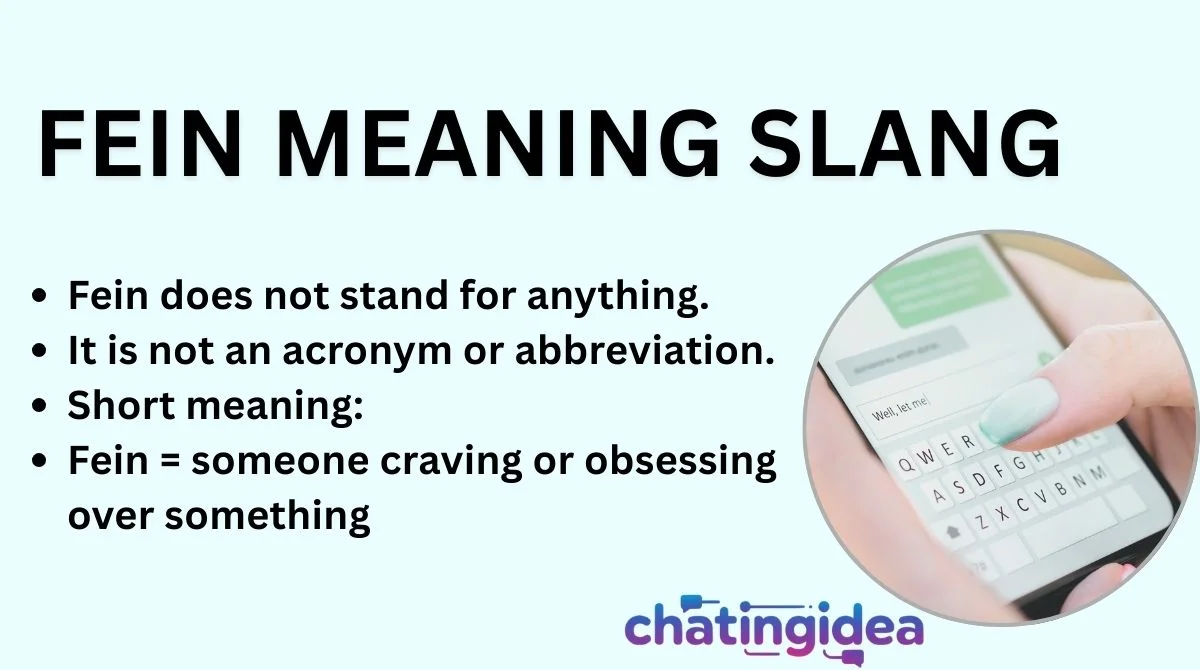
Fein does not stand for anything.
It is not an acronym or abbreviation.
Short meaning:
- Fein = someone craving or obsessing over something
The word comes from a slang variation of “fiend.” Over time, spelling shifted in online culture, especially in hip-hop and street slang.
Simple breakdown:
- Fiend → Fein
- Meaning stayed similar: intense desire or addiction
So if you’re searching for a “full form,” the answer is simple—there isn’t one.
Origin, History & First Known Use of Fein
The slang fein traces back to African American Vernacular English (AAVE) and hip-hop culture. It evolved from the word “fiend,” which originally referred to someone addicted to drugs.
Over time, the meaning softened and expanded:
- From literal addiction
- To exaggerated desire
- To playful obsession
Rap lyrics, street conversations, and internet memes helped popularize the alternate spelling fein, making it trendier and more casual.
By the late 2010s, the term spread heavily on:
- Twitter (now X)
- TikTok
- Instagram comments
Now, it’s mainstream slang used globally, especially by Gen Z.
How People Use Fein in Daily Conversations
In everyday talk, fein is rarely literal. It’s exaggeration for humor.
People use it to describe:
- Wanting attention
- Craving food or drinks
- Obsessing over someone
- Being overly eager
Daily use examples:
- “You’re feining for likes 😂”
- “I’m a fein for late-night snacks”
- “He’s feining over that new game”
Tone is everything. Said with laughter, it’s friendly. Said harshly, it can sound judgmental.
Fein Meaning Across WhatsApp, Instagram, TikTok & Snapchat
The meaning stays similar, but usage shifts slightly by platform.
- Casual teasing between friends
- “Why you feining so hard?”
- Used in comments and captions
- “Fein behavior fr 💀”
TikTok
- Often humorous or dramatic
- “POV: you’re a fein for attention”
Snapchat
- Playful flirting or roasting
- “You a fein 😭😂”
Across platforms, it’s informal and rarely meant to offend seriously.
Different Meanings of Fein in Other Fields
Outside slang, Fein can mean different things:
- Surname: A common last name (e.g., political figures)
- German word: Means “fine” or “delicate”
- Medical/legal context: Rare spelling of “fiend” (older usage)
These meanings are not related to slang usage, which is why confusion happens.
Common Confusions, Mistakes & Wrong Interpretations
People often misunderstand fein because:
- They think it’s always an insult
- They assume it’s a compliment
- They confuse it with “fine”
Common mistakes:
- Taking playful slang too seriously
- Using it in formal writing ❌
- Using it with strangers without context
Rule of thumb: fein is casual slang—keep it informal.
Similar Terms, Alternatives & Related Slang
If you understand fein, you’ll recognize similar slang words:
- Thirsty – desperate for attention
- Down bad – struggling or obsessed
- Fiend – original form
- Desperate – formal version
- Obsessed – neutral tone
📌 Internal linking tip:
Link this article to related slang pages like “thirsty meaning slang”, “down bad meaning”, or “fiend slang meaning.”
Examples of Fein in Real Chat Situations
Text examples:
- “You a fein for validation 😭”
- “I’m feining for coffee rn ☕”
- “Stop feining, he’ll reply”
Group chat vibes:
- “Why he acting like a fein 💀”
- “Certified fein behavior 😂”
Short, expressive, and emoji-friendly—that’s how it lives online.
How to Reply When Someone Says Fein
Your response depends on tone.
Playful replies:
- “Yeah and I own it 😌”
- “Let me fein in peace 😭”
- “Guilty 💀”
Defensive replies (if needed):
- “Relax, it’s not that deep”
- “I’m just excited, not feining”
Matching the vibe usually keeps things light.
Is Fein Still Popular? Trends & Online Usage
Yes—fein is still popular, especially among Gen Z and online communities.
Current trends:
- Heavy use on TikTok captions
- Meme-driven usage
- Casual roasting slang
While slang evolves fast, fein remains relevant because it’s flexible, funny, and expressive. It may eventually fade or shift—but for now, it’s very much alive.
FAQs: Fein Meaning Slang
1. Is fein a bad word?
No. It’s informal slang and usually playful, not offensive.
2. Does fein mean addicted?
Originally yes, but now it mostly means exaggerated desire.
3. Is fein the same as thirsty?
Very similar, but fein is broader.
4. Can fein be used positively?
Yes, jokingly or self-referentially.
5. Should I use fein in formal writing?
No—keep it for casual chats only.
Conclusion
The slang word fein is a modern, expressive way to describe craving, obsession, or eager behavior—usually in a humorous or exaggerated tone.
While its roots come from the word “fiend,” today’s usage is lighter, playful, and shaped by internet culture.
Whether you see it on TikTok, Instagram, or in group chats, understanding context is key. Used correctly, fein adds personality and humor to conversations.
Used incorrectly, it can sound awkward or rude. Now that you know its meaning, origin, and proper usage, you can confidently understand—and use—fein without confusion.
Language evolves fast, and staying updated keeps your online communication sharp and relatable.

Aurora Blake – English language researcher and vocabulary specialist passionate about explaining word meanings and full forms in a simple, clear way.