Texting moves fast. Abbreviations save time, yet they also create a fair amount of confusion.
One tiny acronym can carry multiple meanings and a wide range of emotions. That’s what happens with “WTD.”
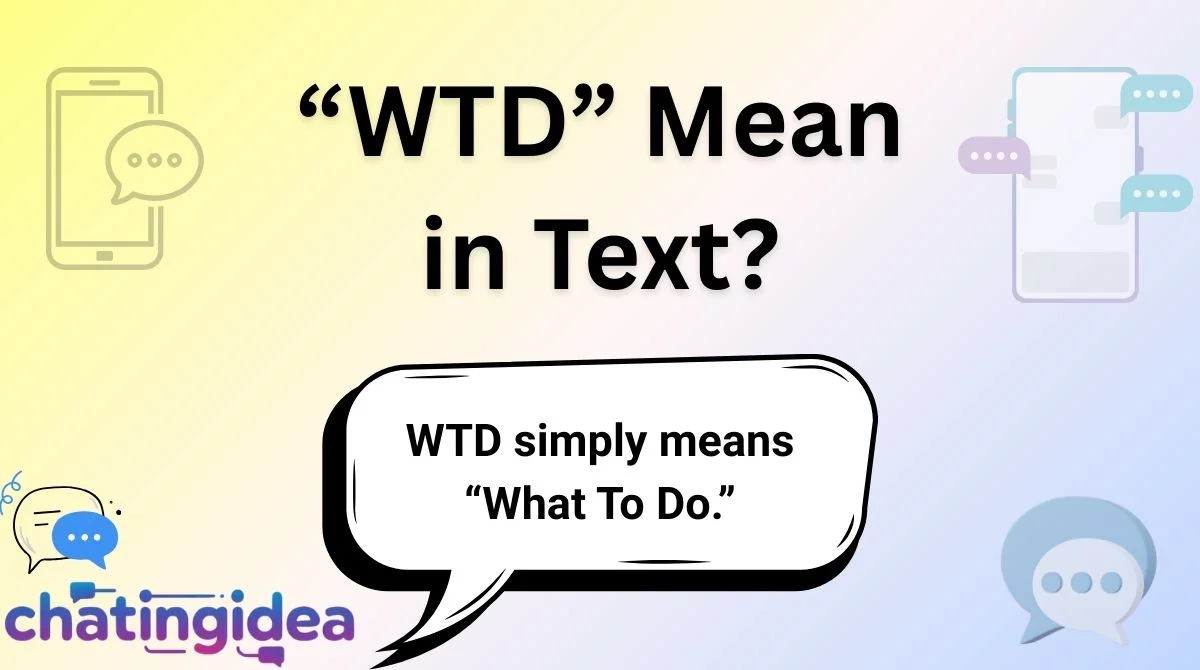
You might think WTD simply means “What To Do.” Sometimes that’s right. Other times it means:
- What’s The Deal
- Want To Do
- What The… (mild censored surprise)
Because those meanings shift from friendly curiosity to suspicion or frustration, context becomes everything.
This guide breaks down every meaning of WTD in texting. You’ll learn how to use it in everyday chat, when to avoid it, and what to say instead in professional settings.
You’ll sound confident and never misunderstand again.
What Does WTD Mean in Text? All Core Definitions Explained
WTD mainly appears in casual digital communication. Think texts, DMs, Discord, gaming chats, group planning messages. The acronym works as a shortcut that keeps conversations moving.
Below are the three real definitions you’ll see:
- What To Do
Meaning: Asking what should happen next
Tone: Curious, lost, planning
Example: “I’m at the station already. WTD if you’re late?” - What’s The Deal
Meaning: Wanting clarification or calling out something weird
Tone: Annoyed or skeptical
Example: “WTD with that email. It made no sense.” - Want To Do
Meaning: Suggesting or asking about plans
Tone: Friendly or flirtatious
Example: “I’m done with homework. WTD later?”
There’s no one “correct” meaning. The situation decides the interpretation.
How Context Changes the Meaning of WTD
WTD behaves like a chameleon. The same three letters soften or sharpen depending on:
- Who you’re talking to
- What just happened
- How the text is formatted
- Emojis and punctuation
- Relationship closeness
Even whether you type WTD, wtd, or Wtd communicates emotion differently.
Quick Tone Guide
| Version | Impression | Emotional Intent |
|---|---|---|
| wtd? | Soft | Curious / playful |
| WTD?? | Alarmed | Urgent confusion |
| Wtd | Neutral | Routine question |
| WTD. | Upset | Annoyed or fed up |
| wtd lol | Casual | Just vibing |
Notice how punctuation changes the energy. A question mark invites conversation. A period can feel like a verbal eye roll.
Real Usage Examples by Conversation Type
Examples make everything clearer. Here’s how WTD lands in different everyday situations.
Friends Making Plans
A: “Movie or bowling?”
B: “I’m easy. WTD?”
Tone: casual, flexible
Work Chat
“I finished step one. WTD next?”
Tone: uncertain yet professional
Risk: may sound impatient without softener words
Relationship / Romantic Texting
“Okay. You’re mad right now. WTD to fix it?”
Tone: emotional and searching for clarity
Gaming (Discord / Xbox Chat)
“We lost two teammates. WTD? Push or camp?”
Tone: urgent, strategic
When Suspicious of Someone
“That story doesn’t add up. WTD?”
Tone: distrust, calling attention
Every scenario shapes the meaning more than the acronym itself.
Tone and Emotion Behind WTD
Messaging removes facial expressions. Tone sneaks into tiny details:
- Multiple question marks show stress or urgency
- Lowercase letters feel soft or friendly
- Periods suggest annoyance
- Emojis shift emotional direction instantly
Mini Examples
| Text | Implied Tone |
|---|---|
| “wtd?” | Curious |
| “WTD right now” | Demanding |
| “WTD 😂” | Playful confusion |
| “WTD…” | Disappointed |
Think of WTD like a mood mirror.
The other person sees how you feel, not just what you ask.
Examples of WTD Across Situations (Table)
| Situation | Meaning | Best Reply Strategy |
|---|---|---|
| You’re running late to plans | What To Do? | Give clear instructions |
| Something isn’t adding up | What’s The Deal? | Offer explanation quickly |
| Friend searching for weekend ideas | Want To Do? | Suggest options |
| Work task confusion | What To Do? | Provide step by step |
| Relationship conflict | What To Do? | Offer reassurance |
Knowing why someone says WTD helps you respond kindly and avoid misunderstandings.
Professional Alternatives to “WTD” (Work-Safe Language)
You want to sound sharp, not sloppy. Employers and clients expect clarity.
Here are polished replacements broken into helpful categories.
When You Need Direction
- How should I proceed?
- What’s the recommended next step?
- Could you advise the plan moving forward?
When You Need Clarification
- Can you help clarify this part?
- What’s the context behind this change?
- What exactly are we trying to accomplish?
When You Want Collaboration
- Let’s review our approach.
- What options do we have here?
- Should we explore potential solutions together?
When Something Feels Off
- Is everything aligned correctly here?
- Can we double check expectations?
- Is there anything we missed?
Shortcuts save time. Yet professionalism requires precision.
Rule of thumb: If you wouldn’t say it in a meeting, don’t text it to your boss.
Casual, Friendly, and Slangy Substitutes for WTD
When chatting with friends, fun beats formality.
Try phrases like:
- “wyd?” (What’re you doing?)
- “Plans?”
- “What’s up rn”
- “Vibing or nah”
- “What we doing?”
- “Next move?”
- “What’s popping?”
- “Game later?”
- “What’s the plan?”
- “Where we going?”
These alternatives keep the vibe open and effortless.
Social texting thrives when the language flows naturally.
When You Should Not Use WTD
WTD sometimes triggers friction. Avoid using it when:
- Talking about emotions or serious issues
- Messaging someone older or unfamiliar
- Writing professional emails or formal messages
- Any situation where assumptions feel risky
If clarity matters, ditch abbreviations.
Good communication builds trust
Lazy shortcuts chip away at it
The Psychology Behind Messaging Shortcuts
Humans crave efficiency.
Phones trained us to type less and respond fast.
Here’s what drives acronym culture:
- Instant replies feel polite and connected
- Short messages reduce cognitive load
- Matching someone’s texting style builds rapport
- Abbreviations create in-group language and closeness
However…
Short texts leave huge gaps for interpretation
You fill those gaps based on your current emotion
So the same message might feel cute one minute and rude the next.
Example:
“wtd”
• If excited → friendly
• If stressed → passive aggressive
Text psychology teaches us:
Words don’t trigger feelings. Context does.
Quick Guidelines for Using WTD the Right Way
Use this checklist before hitting Send:
✅ Sender understands your tone
✅ Relationship casual enough
✅ Situation low-risk
✅ Message won’t seem impatient
✅ No better specific question available
If any box fails… type the full sentence instead.
Clarity always wins.
Related Acronyms People Confuse with WTD
Let’s avoid mix-ups. Here are popular alternatives and what they mean.
| Acronym | Meaning | When to Use |
|---|---|---|
| WYD | What’re you doing? | Starting a conversation |
| LMK | Let me know | Confirmation request |
| IDK | I don’t know | Admitting uncertainty |
| WBU | What about you | Extending question |
| WTF | What the f— | Shock or frustration |
| IMK | In my knowledge | Mild clarification |
Learning these helps you decode the full digital language set.
FAQ: Quick Answers Before You Go
Is WTD rude?
It can sound rude if used with a period or without context. Tone matters most.
Does capitalization change the meaning?
Yes. Lowercase feels friendly. All caps can feel demanding or upset.
Is WTD slang or abbreviation?
It’s considered internet slang and texting shorthand. Mostly informal.
Can I use WTD in business messages?
Better not. Choose clear and professional alternatives in any formal setting.
What’s the main difference between WTD and WYD?
WTD asks for guidance on actions. WYD asks what someone is currently doing.
Conclusion
WTD lives multiple lives.
It might mean What To Do. It might mean What’s The Deal. It might mean Want To Do.
The acronym bends to tone and relationship.
You interpret its meaning based on where the conversation stands right now.
Use WTD when:
- You’re texting someone close
- Stakes stay low
- Tone stays friendly
Avoid it when:
- Emotions run hot
- The topic feels serious
- Communication must be crystal clear
The more intentional you write, the more respect you earn.
Texting doesn’t remove humanity. It depends on it.
Next time a message pops up saying “WTD?”
You’ll know exactly how to reply.

Aurora Blake – English language researcher and vocabulary specialist passionate about explaining word meanings and full forms in a simple, clear way.